Rough seas in the Bay of Biscay forced our ship to skip A Coruña today and head for Vigo instead. Heavy Atlantic swells and gale warnings along the Costa da Morte made docking at our scheduled port unsafe for a cruise ship. The captain altered course into the Ría de Vigo, where the offshore Cíes Islands block the open ocean waves. We welcomed the change. Tying up along the calm harbor piers gave us steady footing and immediate relief from the heavy pitching of the open sea.
Our midnight cabin swap successfully gave us the quiet sleep we needed. Temporarily moving up to stateroom 13223 got us completely away from the noisy bulkhead that kept groaning beside our beds in the rough water. We left all our luggage behind in the first room and simply walked over in our sleeping clothes. The move gave us six solid hours of uninterrupted rest before we woke at 8:00 am. That quiet made all the difference.
Our daytime cabin setup remains tied to our original booking while we wait on arrangements for the transatlantic crossing. We still hold only our original keycards, which leaves the noisy cabin as our official stateroom on the ship's roster. Guest services explained that night to night room changes can be authorized whenever rough seas set the wall squeaking again. Our suitcases remain where they are. We will wait and see if staff can assign us a permanent new cabin once the ship reaches Barcelona for the long ocean crossing.
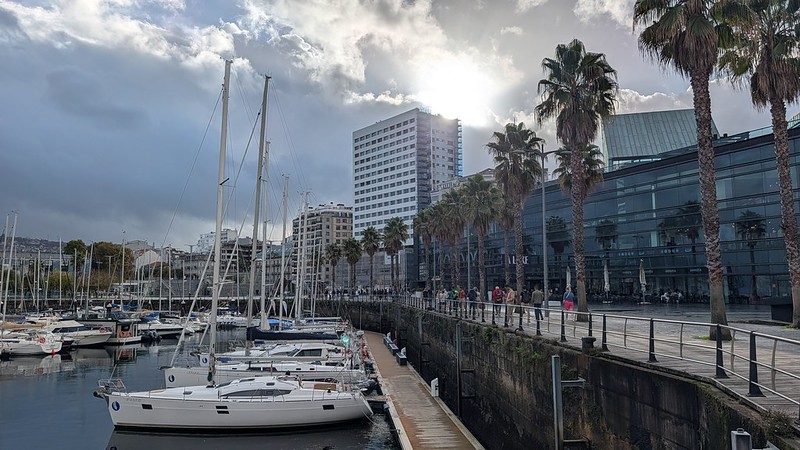
Now, let's get back to the city we are in today. Vigo is an industrious, hilly port city built around one of the finest natural harbors in northern Spain. The shelter of the Cíes Islands turned the estuary into an early hub for Celtic hillforts and Roman fish salting. That protected water also made it a regular target for invaders, including medieval Viking raiders and several attacks by Sir Francis Drake. In 1702, the Battle of Vigo Bay sent Spanish silver galleons to the bottom, creating salvage legends that inspired Jules Verne's Twenty Thousand Leagues Under the Sea. Geography shaped its entire history. Local citizens drove out Napoleon's garrison in 1809, and today the city thrives on Europe's busiest fishing fleet and a massive Stellantis plant producing commercial vans.

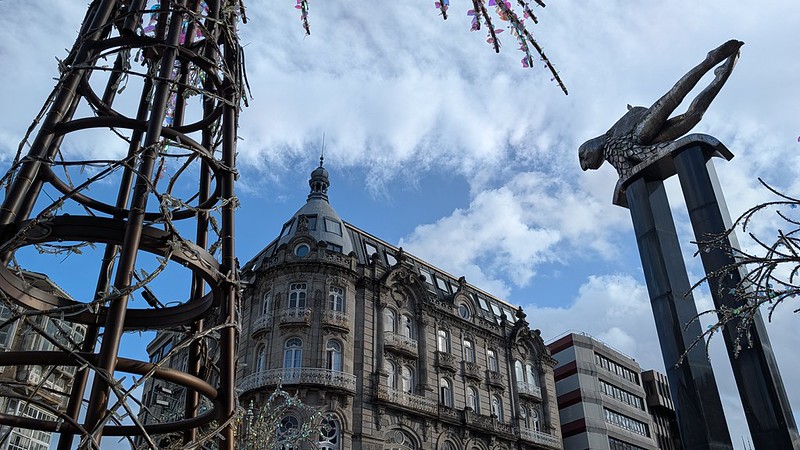
A morning walk gave us a good workout on the hills before wet weather moved in for the afternoon. We spent a couple of hours climbing the steep granite streets up to the municipal building, watching city crews in bucket trucks stringing Christmas lights across the avenues. Rain arrived steadily after lunch. We spent the rest of the day on board the ship watching the gray drizzle over the harbor. Temperatures reached 16 degrees Celsius, marking a noticeable warming trend after the chill of Southampton. We welcome the warmer air.