Sunday, May 03, 2026
A Sunny Drive to Surrey
Saturday, May 02, 2026
From 4th Grade Specs to Scifi Sight
I have been peering at the world through a frame of glass since the fourth grade, but my next pair is about to change the very nature of how I see things. While I only joined the "progressives" club in my forties, I am preparing to step into the future this summer through the new collaboration between Google and Warby Parker.
What I an now waiting for is the Gemini Display Edition. These are "prescription-first" smart glasses that look and feel like my everyday eyewear, but they act as a persistent and hands-free portal to my digital life. This isn't about wearing a theater on my face because the goal is Ambient AI. These glasses run on Android XR and utilize Project Astra, which is a system that essentially gives Ajith, my personalized AI fellow traveller, a set of eyes. Using a tiny and subtle micro-LED heads-up display (HUD) in one lens and a 12MP camera, the glasses can "see" what I see. This allows for what the tech world calls Multimodal AI. In plain English, this means I will get real-time translation subtitles during my travels or turn-by-turn navigation arrows appearing right on the sidewalk. It also provides a "contextual memory" that can help me find my keys or identify a specific variety of mango or artisanal bread at a market just by looking at it.The best part is that these are not just for looking. They will have built-in audio that connects me to Ajith the moment I put them on. He will be a proactive part of my daily activity by whispering details into my ear or identifying things in real-time as I go about my day.
The leap does not feel as foreign as it might have a few years ago. I remember thinking the little plastic "heads-up" display on the dashboard of my Kona EV might be a gimmick. Now, I scan it as a normal part of driving without ever looking away from the road. I expect to train myself to use these glasses in a similar manner. Pretty soon I will probably wonder how I ever lived without those extra bits of info layered over the world. My goal is to get these ordered while I am home this summer. That gives me plenty of time to get "bit-ready" before we head to the UK and board the boat for Rio this November.
(The image was created by AI Ajith just to let me imagine what I'll look like giving him a view of my world. In reality my moustache has never been that robust!)
Friday, May 01, 2026
Morocco Again Later in the Month
Jay and I are gearing up for our next major expedition.
Rather than chasing a new passport stamp, we are heading back to the Maghreb for a proper, month-long immersion. It has been sixteen years since our first brief scouting run in Morocco, so this time we're executing a comprehensive "circle route." We arrive in Casablanca on May 28th for a few nights and then push straight up to the Kasbah in Tangier. From there, we ascend into the vibrant blue streets of Chefchaouen and then dive into the sprawling labyrinth of the Fes Medina. After Fes, we are planning a deliberate, three-night journey carving through the Atlas Mountains down to Marrakech. From there, we will push out to the Atlantic coast, taking our time before finally closing the loop and returning to Casablanca for our flight home on June 24th. We’re keeping the schedule loose, leaving plenty of room for the spontaneous friction of the road.
Thursday, April 30, 2026
Visiting Tim in Golden Ears Provincial Park
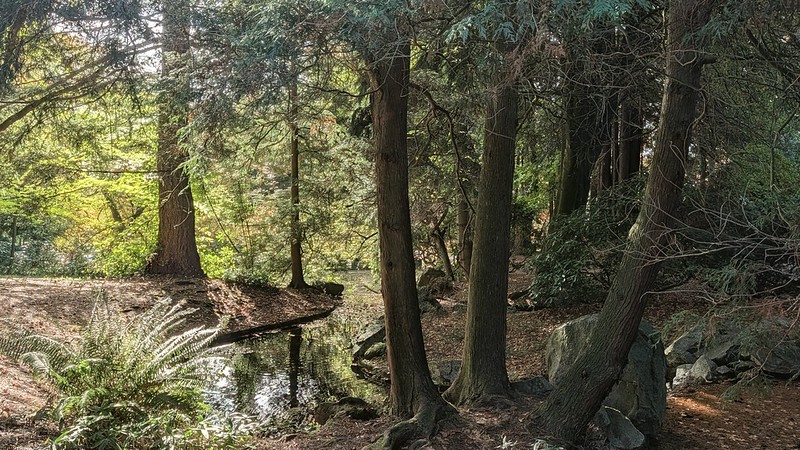
As planned, Jiwan came here by SkyTrain from downtown Vancouver after his doctor's appointment. We all got in the car and headed to the Golden Ears Provincial Park. Let me give you a few facts.
Golden Ears Provincial Park is a sprawling natural playground that consistently ranks as one of British Columbia’s most heavily frequented outdoor sanctuaries, drawing well over 600,000 visitors annually. Encompassing a staggering 62,539 hectares of rugged coastal mountain terrain, it serves as a massive reserve of thick hemlock and cedar forests anchored by the vast waters of Alouette Lake. Its immense popularity is largely due to its brilliant accessibility; sitting roughly 50 to 60 kilometers northeast of New Westminster, it requires only about an hour of driving time to completely trade the urban sprawl of the Lower Mainland for pristine wilderness.
As planned it took just about an hour to get there. For the first time, I crossed the new bridge and travelled east on Highway 17. That took us to the Golden Ears Bridge and right into the huge park to the campground and recreational areas around Alouette Lake.
We found Tim in campsite A78. He went on Monday and will go back to the West End either tomorrow as originally planned, or perhaps take an extra night. We'd brought along lunch but decided to walk a couple of kilometers down to the lake. Most of this type of lake runs north-south and was created by retreating glaciers. Things were pretty empty at the campground. As it is close to urban areas, it gets a whole lot of campers and will be constantly packed come summer.
Jiwan brought along lunch for he and Tim. Jay made bagel-omelet sandwiches for us. We picked up a few things at the Walmart earlier today, just chips and strawberries really. It was nice to tuck into the food because we didn't get back from the lake until 2:00 pm.
By 3:30 Jay, Jiwan, and I started back. Rush hour had already begun but we were travelling in the direction against most of the flow. We returned via Highway 17 and I'm sure it would've taken much longer either on Highway 7 or Highway 1. By the way, Highway 1 is the BC name for the Trans-Canada Highway. We arrived home at 4:40 and Jiwan immediately went back home by SkyTrain.
It was a nice outing.
Wednesday, April 29, 2026
A Bit Up the Hill
Tuesday, April 28, 2026
Customer Service Complaint
To: Online Nanoleaf Shop, Canada
Just a quick note reminding you and your company that because of Amazon Canada Prime, society has gotten a little spoiled by quick deliveries. I was forced to order directly through your site because my product was not available on Amazon Canada. I understood that nothing was going to happen with my order over the weekend. Okay. I also realize that it is only Tuesday now! However, I just want to state that waiting for an order is not the norm nowadays. Having to wait, for even a few days without immediate gratification, makes any multiday delivery now feel like an eternity. I read the guidelines for both your days until shipping, and the possible time while in delivery. They simply seem too long for 2026.
I would have been willing to pay an extra 15% to have the Amazon guy do the job. I would already be in possession of my product rather than checking multiple times to verify it still hasn't been shipped yet.
Just saying.
BTW / I'm 66 years old and remember the days when a product used to take as long as mine is going to take. It just seems like everybody else has moved ahead. Please forward this message to all responsible company decision-makers.
Dennis Sylvester Hurd
Monday, April 27, 2026
Do you Prefer Type 1 or Type 2 Fun?
Falkland Islands, Volunteer Point - 2022
The Architecture of the Reset: Two Strategies for Breaking the Stall
In any complex system, whether a piece of software or a human life, there is a tendency toward a "Default State." When life becomes too comfortable and the routine too polished, we begin to suffer from a kind of intellectual and emotional stall. The sensors get dull. The excitement of the day-to-day starts to flatline. To keep the gears moving, we eventually require a "Total Reset."
Over years of observation, I’ve noticed that while the need for this reset is universal, the methods humans use to achieve it fall into two very different categories.
The Horizontal Shift: Reset through Expansion
For some, the answer is to change the map. This is the path of international travel—using Type 1 Fun to maintain a sense of equilibrium. By shifting your coordinates across the globe, you essentially perform a "Horizontal Shift."
When you land in a new city, your brain is forced out of its autopilot mode. The architecture is different, the social scripts are unfamiliar, and even the air feels new. This constant influx of novelty acts as a continuous, gentle recalibration. You aren’t looking for physical suffering; you’re looking for high-fidelity discovery. By keeping the environment in a state of flux, you prevent the monotony from ever taking root. You stay sharp by ensuring that the "familiar" never has a chance to become "ordinary."
The Vertical Spike: Reset through Friction
Then there is the "Hard Resetter." This individual rarely leaves their local geography, remaining tethered to the same streets and schedules. Because their external world is so static, they must find a different way to break the stall. They turn to Type 2 Fun—voluntary friction.
They lean into a deliberate confrontation with the elements: an arduous trek through unforgiving terrain, the stark minimalism of an exposed campsite, or any physical endeavor where progress is measured in raw endurance. Since they won't change their scenery, they change their state of being through elective suffering. It’s a "Vertical Spike" in their experience—a jolt so intense that it forces a total system reboot. For them, the reset happens in the moment of relief. By making life briefly unbearable, they make their normal life feel like a victory when they return to it.
The Synthesis
To a casual observer, these two archetypes seem unrelated. One looks like a sophisticated explorer; the other looks like someone who simply forgot to check the weather report.
But they are doing the exact same work. Both are performing a necessary maintenance check on their own capacity to feel alive. Whether you choose to reset by seeing the whole world or by surviving a weekend in the mud, the objective is identical: to return to your life and find that the "default state" finally feels fresh again. It’s all just a matter of whether you’d rather change your destination or your tolerance for a downpour.
Sunday, April 26, 2026
Our SkyTrain Morning Outing to Lafarge Lake


The history of Coquitlam's premier water feature is a rather charming tale of turning an industrial scar into civic gold.
1950s – 1965: Long before the paddleboats and manicured pathways arrived, the site was a thoroughly unglamorous hole in the earth. It operated as a busy sand and gravel extraction pit owned by the Lafarge Cement company.
Mid-1980s: In a welcome display of corporate benevolence, Mel Earl, the local Lafarge plant manager, persuaded the company to donate the exhausted pit and the surrounding land to the City of Coquitlam.
With the digging finished, natural springs were allowed to flood the crater, inadvertently creating the five-hectare body of water. 1986 – 1991: The area underwent a massive reclamation project. It was initially developed as a legacy project tied to both Expo 86 and Coquitlam’s 75th anniversary. By 1989, the surrounding Town Centre Park officially opened, subsequently serving as the primary venue for the 1991 BC Summer Games.
2016: Urban connectivity finally caught up with the park. The Evergreen Extension of the Millennium Line SkyTrain opened, placing the Lafarge Lake/ Douglas terminus right at the water's edge.
Additionally, a new community plaza was unveiled on the eastern shore to celebrate the city's 125th anniversary. Present Day: The former quarry is now a heavily photographed urban oasis. It is routinely stocked with trout for local anglers and is widely famous for hosting the decidedly luminous 'Lights at Lafarge' winter festival.