
Reaching sixty-seven brings plenty of quiet surprises, but finding myself genuinely captivated by cosmetic chemistry was certainly nowhere on my youthful radar. Decades ago, my personal grooming philosophy began and ended with whatever indifferent bar of soap occupied the shower, followed perhaps by a stinging splash of drugstore aftershave if a dull razor blade misbehaved. Skincare in those days always seemed like an elaborate retail racket reserved for glossy magazine advertisements, packed with mystical French botanicals and three-figure price tags designed to fleece the credulous. Yet here I sit in my Carnarvon Street apartment, peering through reading glasses at tiny amber and frosted glass bottles and holding court on intracellular turnover. It turns out that curiosity does not automatically retire when the career wraps up, even when the subject matter migrates from syntax to peptide chains. If an inexpensive glass vial can mount a respectable rear-guard action against Father Time, I am more than happy to sign up for the campaign.
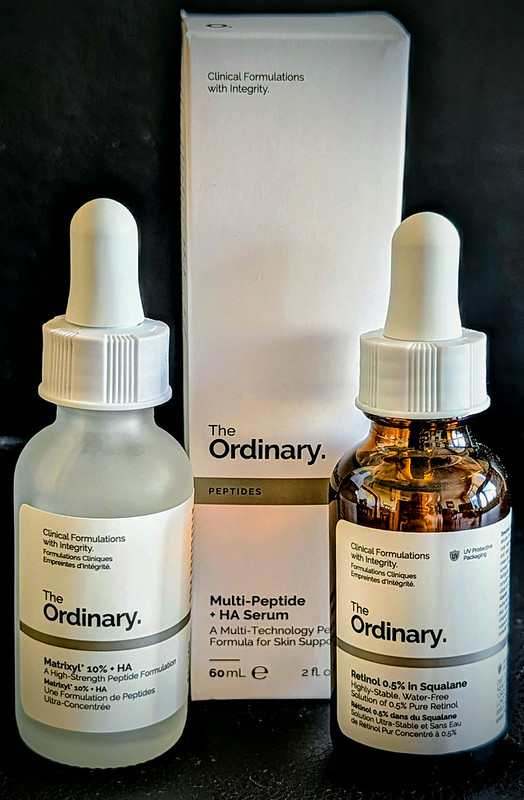
The catalyst for this late-in-life conversion is a proudly Canadian enterprise called The Ordinary, an outfit that essentially dragged the entire cosmetic cartel into the daylight. Conceived in Toronto under the banner of Deciem by the eccentric software entrepreneur Brandon Truaxe, the company recognized that the active ingredients inside luxury creams cost mere pennies to manufacture. Rather than bottling cheap lipids in heavy gilded crystal, Truaxe stripped away the fairy dust and began hawking unadorned chemical molecules by their actual laboratory names and percentages. The venture was a glorious, chaotic middle finger to industry pretense, even if the frantic brilliance that built the brand ultimately consumed its creator in a tragic, high-profile unraveling. His premature death in 2019 was deeply sorrowful, yet the commercial revolution he ignited remains permanent: functional dermatology had been liberated from the department store counter. He permanently ruined the ninety-dollar face cream racket, and every pragmatist in the country owes him a quiet nod of respect.
What completely won me over was the sheer, unapologetic mechanics of the chemistry. Instead of fantastical marketing promises about nocturnal dewiness, one is handed a straightforward bottle of 0.5% retinol suspended in plant squalane for roughly ten Canadian dollars. The molecule does not negotiate; it simply instructs cellular receptors to accelerate turnover and coax tired skin into behaving younger than the calendar suggests. Pairing that evening heavy-lifter with a morning chorus of Multi-Peptide and Hyaluronic Acid serum gives the structural scaffolding a diplomatic boost without starting an inflammatory riot. Layered neatly around sessions with my red light panel, the entire ritual feels less like vanity and more like running a meticulous maintenance program on a vintage engine. After all, if a ten-dollar bottle can throw a wrench into the gears of chronological aging, I call that solid Canadian engineering.